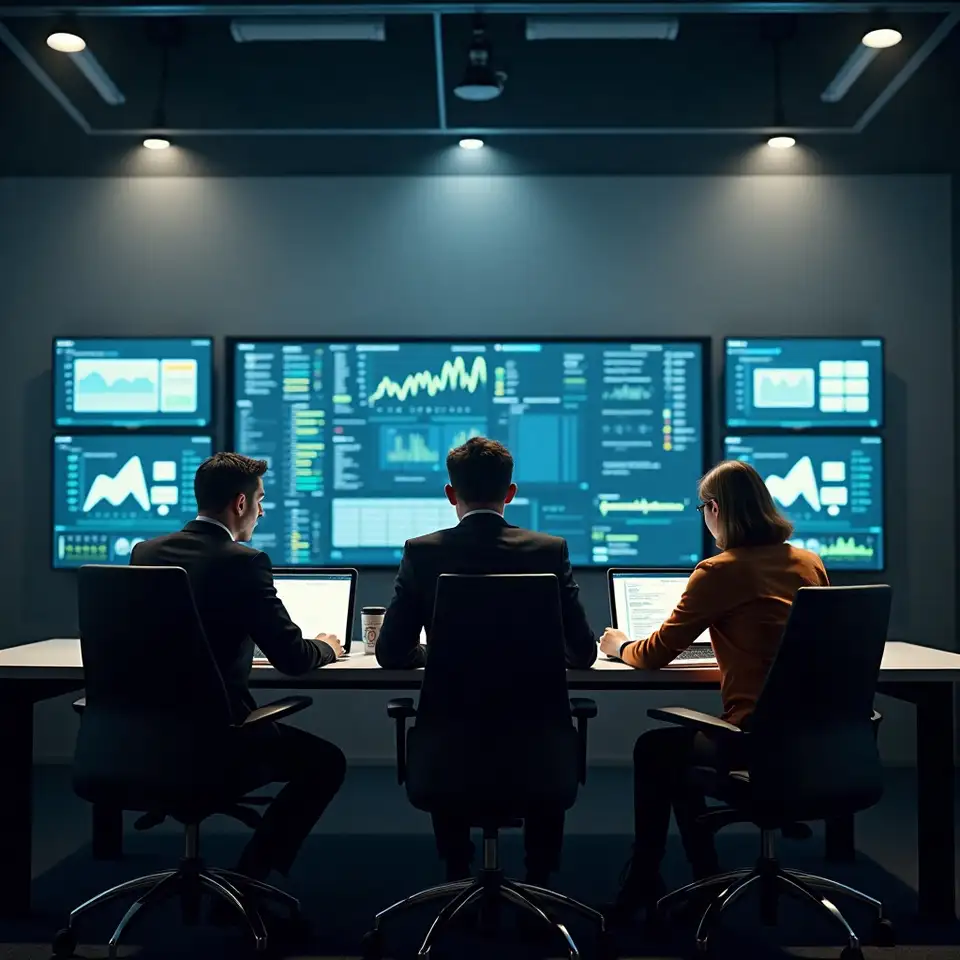
industrial leadership team reviewing documented finance decisions

Start the discussion

Ready to bring more structure, documentation, and clarity to your industrial finance decisions

What would change if every major industrial finance decision you approve this year came with a short explanation that still makes sense three to five years from now? If you are weighing equipment upgrades, facility changes, or adjustments to existing obligations, a focused conversation with Sylvanteon can help you frame options, clarify trade offs, and document your reasoning without promising specific outcomes. This gives your team something concrete to revisit as conditions evolve and supports more transparent discussions with boards and lenders.

Talk to us

Bringing structure to industrial finance conversations

How do you stress test industrial finance decisions against several plausible futures

How do you stress test an industrial finance decision before the future arrives? Our structured approach begins with a close look at your current operational footprint, including asset condition, utilisation, and key contractual commitments. We then explore how these elements could shift under different conditions, such as cost changes, regulatory updates, or variations in demand. This process surfaces where your position is robust and where it may require additional attention.
From there, Sylvanteon helps you compare project and funding options in a consistent way. We consider how each path might influence cash demands, covenant flexibility, and room for later adjustments, while acknowledging that results may vary and that past performance does not guarantee future outcomes. Throughout, we keep the discussion grounded in clear language and practical documentation, so that when you look back three to five years from now, the reasoning behind your decisions remains understandable.

Connect equipment plans, maintenance cycles, and contracts with medium term financial implications.

Compare several realistic paths side by side, instead of relying on a single forecast.

Capture assumptions and trade offs in clear notes that you can revisit later.
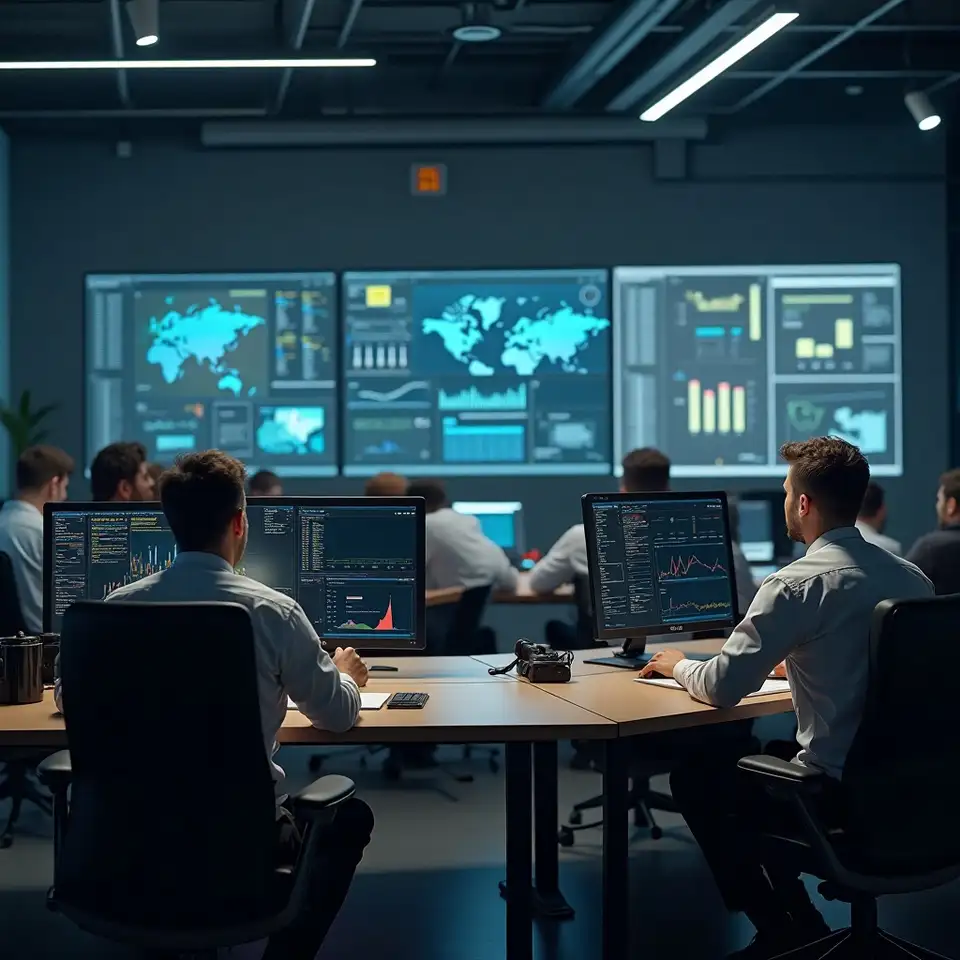
industrial operations and finance team reviewing dashboards together
Current industrial finance context
Updated insights for 2026

Medium term industrial finance perspective

Connecting today’s industrial finance choices with the position you want several years from now

How do you make sure the industrial finance decisions you approve this year still make sense when you review them three to five years from now? At Sylvanteon, we focus on that medium term horizon. We work with industrial teams across Canada to connect plant realities, contract structures, and funding choices in a way that stays understandable over time. Instead of relying on a single forecast, we look at several realistic paths your projects could follow, paying attention to maintenance cycles, regulatory expectations, and potential cost changes. For each path, we explore how different funding approaches might influence cash demands, flexibility, and resilience, while recognising that results may vary and that past performance does not guarantee future outcomes. Our role is not to sell investment products or training programs, but to support analytical reviews and structured conversations that help you explain why a particular decision fits your situation today, and how it might behave under changing conditions. When you revisit these choices later, you have a clear narrative, not just a spreadsheet, to guide your discussion with boards, lenders, and internal teams.

industrial finance team discussing medium term project decisions

Industrial finance conversations with Sylvanteon

What changes when every major industrial finance decision comes with a clear explanation you can revisit later? Our work with Sylvanteon clients centres on that medium term horizon, linking operational realities with practical financial implications.

What our structured conversations usually cover

  • Clarifying the current industrial baseline: We begin by building a shared baseline that reflects your current industrial position, including asset age, utilisation patterns, key contracts, and regulatory obligations. This step surfaces assumptions that may have been implicit, such as expected throughput or renewal terms, so later discussions rest on facts different teams can recognise and challenge.
  • Mapping practical medium term scenarios: Next, we outline a small set of realistic scenarios that look three to five years ahead. These scenarios consider maintenance windows, potential cost shifts, and plausible changes in demand or regulation. The goal is not to capture every possibility, but to focus attention on where your position appears robust and where additional flexibility might matter.
  • Examining how funding behaves across paths: With scenarios in place, we explore how different funding choices could interact with each path. We look at timing of cash demands, covenant expectations, and room for later adjustments, while emphasising that results may vary and that past performance does not guarantee future outcomes. This comparison helps you see trade offs clearly without suggesting that any single option is certain.
  • Documenting decisions for future review: Finally, we help you capture the reasoning, assumptions, and trade offs behind your decisions in concise language. These records support board oversight, lender conversations, and internal learning. When you revisit a project several years later, you can trace why a particular path was chosen and how alternatives were weighed at the time.

Our focus areas

How can you hold industrial finance conversations today that still feel useful three to five years from now? Sylvanteon focuses on that question. We start by clarifying your current plants, contracts, and regulatory context, then outline several realistic paths your projects could follow. From there, we explore how different funding choices might behave across those paths, paying attention to cash demands, flexibility, and potential pressure points. The emphasis is on transparency, documentation, and shared understanding, not on promising specific outcomes or removing uncertainty. Results may vary, and past performance does not guarantee future results.

How Sylvanteon approaches industrial finance decisions

What makes Sylvanteon’s approach distinctive is the attention to how decisions will look when you review them later. We do not sell courses or investment products. Instead, we support analytical reviews and structured conversations that keep industrial finance thinking tied to plant realities, clear documentation, and practical time horizons. This helps your organisation navigate uncertainty with more transparency and shared understanding.

Industrial insight

How do you connect the industrial projects on your desk today with the financial position you want to hold three to five years from now? Many organisations rely on static spreadsheets that capture a single moment, even though plants, contracts, and regulations continue to evolve over time.
At Sylvanteon, we focus on building a structured, medium term view that links operational realities with financial implications. We begin by clarifying your current baseline, then outline a small set of realistic scenarios that reflect how your assets, contracts, and obligations might behave.
For each scenario, we explore how funding choices could influence cash demands, flexibility, and resilience, while emphasising that results may vary and that past performance does not guarantee future results. This helps you see where your position is robust and where additional flexibility might matter.
We also pay attention to how information is shared across your organisation. Dense models can be difficult to explain to people who were not involved in building them, so we translate key points into clear, plain language summaries for boards, lenders, and internal teams.

By capturing assumptions, trade offs, and decision points in accessible language, you create a reference that can be revisited during reviews and future planning cycles. When conditions change, you can compare what was expected with what has actually occurred, then adjust plans where appropriate.

This approach does not remove uncertainty, but it makes it more visible and manageable. Over time, your industrial finance decisions become easier to explain, easier to revisit, and better aligned with the operational realities of your plants and contracts.

Results may vary, and past performance does not guarantee future outcomes, yet a structured, scenario based conversation can make each industrial finance decision more deliberate and transparent for everyone involved.

operations and finance team reviewing industrial dashboards
industrial facility at night with financial planning context

How Sylvanteon helps you manage industrial finance over time

How do you turn complex industrial finance choices into decisions that remain understandable over time? Sylvanteon focuses on coherent project views, shared narratives, regular reviews, and practical documentation, always acknowledging that results may vary and that future conditions may differ from current expectations.

Building a coherent project view

How can you move from scattered spreadsheets to a coherent picture of your industrial projects over the next few years? We start by gathering core operational and financial assumptions into a single, structured view. From there, we outline several realistic paths your projects could follow, considering asset condition, maintenance plans, and contract terms. This helps you see how choices made now might influence flexibility and resilience later on.
Consolidate essential assumptions
Outline realistic project paths
Highlight medium term pressures

Creating shared understanding across stakeholders

Industrial finance discussions often span operations, finance, and external partners. We help you create shared narratives that translate technical details into language non specialists can follow. This supports more productive board meetings and lender conversations, because everyone can see how the project fits into your broader position, while understanding that results may vary and that external conditions can shift.
Bridge technical and financial views
Support stakeholder alignment
Maintain clear caveats

Keeping plans current as conditions evolve

Conditions around industrial projects rarely stay static. Costs, regulations, and demand can move in ways that affect earlier assumptions. We encourage periodic reviews that compare original expectations with what has actually occurred, then adjust plans where appropriate. This habit does not remove uncertainty, but it helps you respond earlier and with more clarity when circumstances change.

Schedule regular check ins
Compare plans with reality
Update expectations transparently

Documenting decisions for future reference

When you look back at a project several years after approval, it is helpful to understand not only the decision, but the reasoning behind it. We support the creation of concise records that capture assumptions, alternatives, and identified risks. These references strengthen governance and provide practical learning material for future projects, while acknowledging that results may vary and that past performance does not guarantee future results.
Record key assumptions
Capture trade offs and options
Support future project learning

How Sylvanteon supports your industrial finance thinking

How do you keep industrial finance discussions grounded without losing sight of the future? At Sylvanteon, we start with your current plants, contracts, and operational constraints, then build out realistic views of how different choices might play out over several years. We do not promise specific returns or outcomes. Instead, we offer structured conversations, analytical reviews, and clear documentation that help you explain and revisit key decisions as new information emerges.

Linking projects with funding realities

When you consider a major equipment upgrade or facility project, the immediate numbers are only part of the picture. We help you explore how different funding approaches could influence maintenance timing, energy use, and flexibility for later improvements. By walking through several practical scenarios, you gain a clearer sense of how today’s choice might shape your options three to five years from now, without assuming a single outcome.

Creating shared understanding across teams

Industrial finance conversations often involve technical experts, finance teams, and external partners who each bring their own language and priorities. We focus on building shared summaries that translate complex assumptions into clear explanations. This makes it easier to present projects to boards or lenders and to revisit those explanations later when conditions change, while keeping caveats about uncertainty visible.

Exploring practical future scenarios

Many organisations want to understand how their industrial projects might perform under a range of conditions without relying on precise forecasts. We support analytical reviews that outline reasonable ranges, key sensitivities, and decision points, emphasising that results may vary and that past performance does not guarantee future outcomes. This helps you stay prepared for several plausible futures rather than relying on a single scenario.

Planning with changing conditions in mind

Regulatory expectations, environmental standards, and market dynamics continue to evolve, and industrial projects must adapt. We help you think through how potential changes could interact with your current plans and funding structures over the coming years. The focus is on resilience and clarity, so that when you revisit decisions later, you can trace why a particular path was chosen and what alternatives were considered.